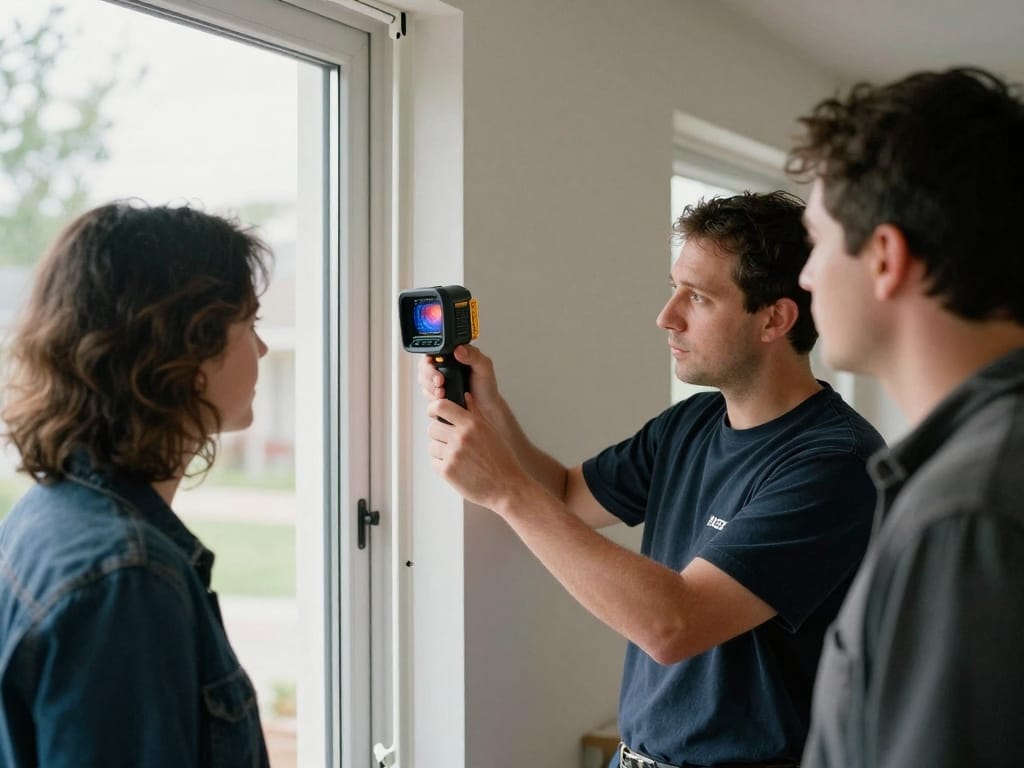
Maintenance of combined window and shading assemblies

Maintenance of combined window and shading assemblies

Introduction to Maintenance of Combined Window and Shading Assemblies

Maintaining combined window and shading assemblies is key for several reasons. It directly affects building performance, energy efficiency, and overall workplace comfort. For HR in companies with over 200 employees, keeping these assemblies well-maintained can lead to big benefits, including lower energy costs and happier employees.

Schedule regular maintenance at least twice a year, ideally in spring and fall. This timing allows for adjustments before the extreme temperatures of summer and winter. During checks, look for signs of wear and tear, such as cracks in the frames, malfunctioning shades, or seals that have lost their effectiveness.

Maintenance often involves cleaning the windows and shades, lubricating moving parts, and checking for any obstructions that might hinder operation. Discover how to install windows in Belgium including what to check before and after fitting.. It’s also important to ensure that the shading systems are calibrated correctly to maximize natural light and minimize heat gain.

Common mistakes include skipping routine checks, using improper cleaning agents that can damage the materials, and failing to address minor issues before they escalate. These oversights can lead to bigger problems, such as water infiltration, increased energy consumption, and even structural damage over time.

Incorrectly maintained assemblies can result in higher utility bills, discomfort for employees, and potential safety hazards. The costs of repairs and replacements can quickly add up, not to mention the indirect costs associated with decreased productivity and employee morale.

By prioritizing the maintenance of these assemblies, HR can contribute to a more efficient, comfortable, and cost-effective work environment.

Citations and other links

Understanding Combined Window and Shading Assemblies

Keeping combined window and shading assemblies in good shape is key for top building performance, energy savings, and comfort inside. These setups include windows with built-in shading like blinds, shutters, or awnings to manage light, heat, and privacy.

In simple terms, taking care of these assemblies means lower energy bills, longer life for windows and shades, and a steady indoor environment. Make maintenance a habit, especially before seasons change, to catch problems like dust buildup, worn parts, or alignment issues early.

Maintenance means cleaning windows and shades regularly, checking that moving parts work smoothly, and making sure everything is firmly in place. Common tasks include lubricating parts, tightening screws, and swapping out old pieces.

A common slip-up is ignoring the shading parts, which messes up light control and hikes up cooling or heating needs. Another mistake is skipping over seals and frames, leading to drafts, moisture leaks, and possible structural harm.

Doing it wrong can cause big problems. Poorly maintained assemblies can spike energy costs, worsen indoor air quality, and cause structural damage over time. Regular, careful maintenance is essential for keeping these assemblies working well and lasting longer.

Primary Search Intent: Informational

Operational Efficiency

Keeping window and shading assemblies clean and well-maintained boosts workplace efficiency. Natural light through clean windows and shades cuts the need for artificial lighting, saving energy and creating a nicer work environment. Employees work better in well-lit areas. Regular checks keep these systems running smoothly, preventing disruptions.

Cost Savings

Regular maintenance of these assemblies saves money over time. Fixing small issues early avoids costly repairs or replacements. Well-kept windows and shades also improve insulation, lowering heating and cooling costs. This is especially beneficial for large organizations with multiple sites, where savings add up.

Employee Comfort

Properly maintained window and shading assemblies are key to employee comfort. They help regulate temperature and reduce glare. Comfortable conditions lead to happier, more productive employees and lower sick days. Poor indoor air quality and extreme temperatures can cause health problems.

Aesthetic Appeal

Clean, well-maintained windows and shades improve a workplace’s look. A neat appearance impresses clients and boosts employee pride. Regular cleaning prevents dirt buildup, keeping the workplace looking great. This attention to detail shows the company’s professionalism.

Safety Compliance

Maintaining window and shading assemblies is crucial for safety. Regular checks ensure these systems meet safety standards. Faulty assemblies can be dangerous, causing falling debris or blocking emergency exits. Keeping them in good condition protects employees and avoids legal issues.

Benefits of Regular Maintenance

Regular maintenance of window and shading assemblies offers real, measurable benefits. First, it boosts energy efficiency. Well-maintained windows and shading systems cut energy use, which is crucial in large office buildings where heating and cooling costs can soar. Regular cleaning and seal checks prevent air leaks, making HVAC systems work more efficiently.

Comfort improves, too. Employees in well-maintained spaces face fewer drafts and more stable temperatures. This leads to fewer complaints and a more productive workforce. It’s about creating a consistent environment where people can focus.

Long-term cost savings are significant. Maintaining these assemblies extends their lifespan. Replacing windows and shading systems is costly. Regular upkeep avoids early replacements, saving your company thousands over time.

When should you address this? Set up a maintenance schedule. Quarterly checks are a good start. Look for dirt, debris, and wear signs. Lubricate moving parts if needed.

Common mistakes include neglecting systems until they break and DIY fixes without proper knowledge. These can cause more damage and higher repair costs later.

Incorrect maintenance can lead to higher energy bills, uncomfortable workspaces, and safety hazards. Broken or poorly maintained windows can also pose security risks. So, it’s about saving money and maintaining a safe, comfortable, and efficient workplace.

Common Maintenance Issues

Regular maintenance of window and shading assemblies is key to building performance and occupant satisfaction. It keeps systems running efficiently, cuts energy use, and boosts indoor comfort. Neglecting maintenance causes problems that hurt building performance and employee happiness.

Common problems are dirt buildup, broken shading mechanisms, and seal failures. These issues often come from neglect or poor handling. For example, dirty windows cut natural light, making HVAC systems work harder and raise energy costs. A broken shading system can cause overheating or underheating, making work conditions uncomfortable.

Routine maintenance should be part of facility management. Regular cleaning of windows and shading system parts, plus checks for wear, can prevent most issues. Do these tasks in mild weather when systems are under less stress.

Common mistakes, like using strong chemicals or not lubricating moving parts, can cause long-term damage. For example, wrong cleaning agents can damage glass, and lack of lubrication can cause jams and breakages in shading mechanisms.

Incorrect maintenance has big consequences. Failed seals can cause drafts and moisture, leading to structural damage and mold. Broken shading systems can cause uneven temperatures, leading to complaints and lower productivity. Neglecting these assemblies raises maintenance costs and lowers workplace comfort and efficiency.

Step-by-Step Maintenance Guide

Keep your window and shading assemblies in top shape to save money and boost your office comfort. Regular checks and cleaning prevent big repairs later. Do this twice a year, before summer or winter.

Begin with a close look. Check for cracks, gaps, or paint peeling. Make sure shading parts move smoothly without noise.

Next, clean everything. Use mild soap and water for frames and glass. Follow the maker’s tips for shading parts. Dry all pieces before putting them back to avoid mold.

Fix small problems right away. Replace broken seals, tighten screws, and add lubrication where needed. Ignoring these can cause bigger issues like water leaks or broken shading systems.

Don’t forget to lubricate moving parts. Without it, parts can stick and need costly replacements. Also, clean out any debris in tracks and crevices to avoid damage.

In short, regular maintenance of your windows and shading systems will save you cash and improve your office space.

Energy performance effects of external shading

Cost Considerations

Maintaining window and shading assemblies isn't just about appearance. It's a major financial concern. Mismanagement leads to unexpected expenses and operational disruptions. Let's break it down:

Why does this matter? These assemblies impact energy efficiency, employee comfort, and building integrity. Neglect leads to higher energy costs, lower productivity, and safety hazards.

Address this during regular facility audits and when building performance changes—like higher energy bills or temperature complaints.

Maintenance should include routine inspections, ensuring parts work correctly, and cleaning windows and shading components. Also, have a contract with a reputable service provider for timely help.

Common mistakes? Ignoring small issues, underestimating professional servicing, and not budgeting for unexpected repairs. These lead to higher repair costs, longer downtime, and safety risks.

Incorrect maintenance causes failing assemblies, increased energy usage, and potential liability issues. Have a clear maintenance plan and budget to avoid these problems.

Choosing the Right Professional

Picking a trustworthy professional for maintaining combined window and shading systems is key to their longevity and efficiency. It’s not just about clean windows; it’s about keeping the complex mechanisms that control light, temperature, and energy efficiency in your office spaces running smoothly. Regular maintenance stops costly repairs and keeps your employees comfortable.

When should you tackle this? Set up a maintenance schedule. Start with quarterly checks, but adjust based on usage and environmental factors. If you spot any issues—like windows that don’t open easily or shading systems that aren’t working right—fix them right away.

Maintenance goes beyond cleaning. Pros should check mechanical parts, lubricate moving pieces, and look for wear or damage. They should also make sure the systems are set up to work efficiently.

Common errors include waiting until something breaks, which often leads to bigger and pricier fixes. Another mistake is picking the cheapest option without checking the pro’s reliability and skill. This can lead to poor work that doesn’t solve the real problems.

If done wrong, you might face higher energy bills and safety risks. Faulty shading systems can be dangerous in emergencies, and poorly kept windows can cause drafts or even break.

When picking a pro, seek pricing transparency and reliability. Ask for detailed quotes and check references. It’s an investment in your workplace’s comfort and safety.

Trust Amplifiers

Keep your windows and shades in top shape to boost energy efficiency, looks, and durability. Regular care stops small problems from turning into big, expensive fixes. Plan check-ups twice a year, especially before harsh weather.

Start by cleaning windows and shades. Use a soft cloth and mild soap for glass, and a vacuum or brush for shades. Look for cracks, loose parts, or broken mechanisms. Lubricate moving parts to avoid jams and ensure smooth operation.

Don’t forget seals and frames. Damaged seals cause drafts, higher energy use, and water leaks that harm your building. Also, check the hardware. Broken parts not only mess up function but can be dangerous.

Wrong maintenance causes issues. Using the wrong cleaners can damage glass or shades. Bad repairs weaken the assembly, leading to higher energy costs and shorter life.

Hire certified pros who guarantee their work to build trust. Clear communication from inspection to repair helps. Many services offer detailed reports and before-after photos for records and future use.

Objection-Handling Segments

Maintaining window and shading assemblies is key for office spaces, especially in large companies with over 200 employees. Regular upkeep boosts functionality and aesthetics, creating a better work environment. Approach this task systematically to avoid higher costs and lower efficiency.

Schedule maintenance checks every quarter. This timing catches issues before they get worse. Maintenance means cleaning windows and shading parts, checking for wear or damage, and ensuring smooth operation. Lubricating hinges and tracks, for example, prevents jams and extends assembly life.

Don’t skip cleaning shading components. Dust and grime can block function, raise energy costs, and cause damage. Incorrect maintenance, like using harsh chemicals or wrong tools, can harm surfaces and void warranties.

In short, proper maintenance of window and shading assemblies keeps them working well and safely. This supports a good work environment and cuts operational costs.

Decision-Support Content

Regular maintenance of window and shading assemblies in corporate settings is key for several reasons. It boosts energy efficiency, keeps office spaces looking good, and improves employee comfort and productivity. Schedule this maintenance regularly, preferably every three months, but at least twice a year.

Maintenance tasks include checking window seals, looking for damage to shading mechanisms, ensuring smooth operation of moving parts, and cleaning windows and shading components. It’s not just about repairs; it’s about preventing problems.

Common errors involve skipping regular checks, leading to bigger issues like water leaks, poor insulation, and structural damage. Forgetting to lubricate moving parts can cause shading systems to jam or work poorly, affecting comfort and increasing energy use.

Poor or missed maintenance can be expensive. It can cause water damage inside offices, raise energy bills due to inefficient windows, and lead to costly emergency fixes that routine checks could have prevented. The goal is smooth operation, long-term savings, and a nice place to work.

SEO Mechanics and Keyword Integration

Regular maintenance of window and shading assemblies is key to energy efficiency, structural integrity, and comfort in commercial buildings. Skipping this can raise energy costs, lower safety, and shorten the assemblies' lifespan. Aim to do this twice a year, in spring and fall, to brace for summer and winter extremes.

Maintenance means checking seals and frames for wear or damage. Watch for cracks, gaps, or warping that let air in. Clear tracks and mechanisms of debris to keep them running smoothly. Lubricate moving parts to avoid strain.

Don’t ignore seals. Damaged ones cut assembly effectiveness, hiking heating and cooling costs. Also, clean shading components like blinds or shades to remove dust and dirt, keeping them working well and looking good.

Poor or skipped maintenance leads to higher energy bills, safety risks from faulty assemblies, and costly early replacements. Keeping these assemblies in top shape not only keeps them working but also makes for a safer, more comfortable workplace.

Outline Usage Contract

Proper maintenance of window and shading assemblies is key to a long-lasting office infrastructure and a comfortable work environment. Ignoring this can raise energy costs, lower productivity, and create safety risks. When should you act? Aim for regular checks, twice a year, and whenever you spot wear signs like drafts, odd noises, or faulty shades.

Maintenance steps include inspecting window frames for rot, rust, or warping, checking seals for gaps, and examining shading mechanisms for obstructions or damage. Lubricate moving parts if needed and clean everything thoroughly.

Avoid common errors like neglecting small issues, thinking "if it ain't broke, don't fix it," and attempting DIY repairs without the right know-how. These can lead to bigger problems, such as water damage or unsafe shades.

Incorrect maintenance can harm the assemblies and put your employees at risk, leading to higher repair costs, energy bills, and possible liability. Invest in professional services to get it right.

A door is a hinged or otherwise movable barrier that permits access (entrance) right into and egress (leave) from an enclosure. The developed opening in the wall surface is an entrance or portal. A door's necessary and primary objective is to provide protection by controlling accessibility to the entrance (website). Traditionally, it is a panel that matches the doorway of a structure, area, or automobile. Doors are typically made from a product matched to the door's task. They are commonly attached by joints, however can move by various other methods, such as slides or counterbalancing. The door might have the ability to relocate various methods (at angles away from the doorway/portal, by gliding on a plane alongside the structure, by folding in angles on an identical aircraft, or by spinning along an axis at the center of the frame) to enable or protect against access or egress. In most cases, a door's indoor matches its outside side. Yet in various other situations (e. g., a lorry door) both sides are radically various. Lots of doors include locking mechanisms to ensure that only some people can open them (such as with a key). Doors might have devices such as knockers or buzzers by which individuals outside reveal their presence. In addition to offering access into and out of a space, doors might have the secondary features of ensuring privacy by protecting against undesirable focus from outsiders, of separating areas with different functions, of permitting light to enter and out of a room, of managing air flow or air drafts so that insides may be better heated or cooled, of moistening sound, and of blocking the spread of fire. Doors can have aesthetic, symbolic, or ritualistic purposes. Getting the trick to a door can indicate a change in condition from outsider to insider. Doors and doorways frequently show up in literature and the arts with symbolic or allegorical import as a portent of change.

.

Thermal insulation is the reduction of warmth transfer (i. e., the transfer of thermal power between objects of differing temperature level) in between items in thermal contact or in range of radiative influence. Thermal insulation can be accomplished with specially engineered methods or processes, in addition to with suitable item forms and products. Warm circulation is an unpreventable consequence of call between objects of different temperature level. Thermal insulation offers a region of insulation in which thermal conduction is lowered, producing a thermal break or thermal barrier, or thermal radiation is reflected rather than absorbed by the lower-temperature body. The shielding capability of a material is determined as the inverse of thermal conductivity (k). Low thermal conductivity amounts high shielding capacity (resistance worth). In thermal engineering, other crucial homes of insulating products are product density (ρ& rho;-RRB- and details heat capability (c).

.

Warm transfer is a discipline of thermal design that worries the generation, use, conversion, and exchange of thermal power (warmth) in between physical systems. Heat transfer is classified into numerous systems, such as thermal conduction, thermal convection, thermal radiation, and transfer of power by stage adjustments. Engineers likewise consider the transfer of mass of varying chemical types (mass transfer in the kind of advection), either cold or hot, to attain warm transfer. While these mechanisms have unique characteristics, they frequently occur at the same time in the same system. Warmth transmission, also called diffusion, is the straight tiny exchanges of kinetic energy of fragments (such as particles) or quasiparticles (such as lattice waves) with the border between two systems. When an object is at a different temperature level from one more body or its environments, warm streams to ensure that the body and the surroundings reach the same temperature level, at which point they remain in thermal stability. Such spontaneous warm transfer constantly takes place from an area of high temperature to another area of lower temperature level, as described in the second legislation of thermodynamics. Warmth convection takes place when the mass flow of a fluid (gas or liquid) lugs its warm via the liquid. All convective procedures also move warm partially by diffusion, as well. The circulation of fluid might be forced by exterior processes, or occasionally (in gravitational fields) by buoyancy forces caused when thermal energy increases the fluid (for example in a fire plume), therefore affecting its own transfer. The latter procedure is commonly called "all-natural convection". The previous process is typically called "forced convection." In this situation, the fluid is compelled to flow by use of a pump, follower, or various other mechanical methods. Radiant heat happens via a vacuum or any kind of transparent tool (strong or fluid or gas). It is the transfer of power by means of photons or electro-magnetic waves controlled by the exact same regulations.

.

About ChâssisPlus Window Supplier Overijse

Driving Directions in Vlaams-Brabant


chassis en bois
50.787369517282, 4.5814380677345
Starting Point
ChâssisPlus Window Supplier Overijse, Trilpopulierenlaan 23, 3090 Overijse, Belgium
Destination
Open in Google Maps
moustiquaire porte
50.751690810637, 4.3914727333754
Starting Point
ChâssisPlus Window Supplier Overijse, Trilpopulierenlaan 23, 3090 Overijse, Belgium
Destination
Open in Google Maps
chassis bois
50.808147286706, 4.4972759063236
Starting Point
ChâssisPlus Window Supplier Overijse, Trilpopulierenlaan 23, 3090 Overijse, Belgium
Destination
Open in Google Maps
prix d un chassis pvc
50.775547813441, 4.4451296785314
Starting Point
ChâssisPlus Window Supplier Overijse, Trilpopulierenlaan 23, 3090 Overijse, Belgium
Destination
Open in Google Maps
porte de garage
50.772761765917, 4.585360980726
Starting Point
ChâssisPlus Window Supplier Overijse, Trilpopulierenlaan 23, 3090 Overijse, Belgium
Destination
Open in Google Maps
porte exterieur
50.726859675551, 4.4752774626942
Starting Point
ChâssisPlus Window Supplier Overijse, Trilpopulierenlaan 23, 3090 Overijse, Belgium
Destination
Open in Google Maps
chassis bruxelles
50.815925782231, 4.4715313188234
Starting Point
ChâssisPlus Window Supplier Overijse, Trilpopulierenlaan 23, 3090 Overijse, Belgium
Destination
Open in Google Maps
chassis bois bruxelles
50.73396919404, 4.4119655205464
Starting Point
ChâssisPlus Window Supplier Overijse, Trilpopulierenlaan 23, 3090 Overijse, Belgium
Destination
Open in Google Maps
volet electrique
50.75776577416, 4.4614567454926
Starting Point
ChâssisPlus Window Supplier Overijse, Trilpopulierenlaan 23, 3090 Overijse, Belgium
Destination
Open in Google Maps
porte d'entrée
50.816310664282, 4.4060256190832
Starting Point
ChâssisPlus Window Supplier Overijse, Trilpopulierenlaan 23, 3090 Overijse, Belgium
Destination
Open in Google Maps
Google Maps Location
https://www.google.com/maps/dir/?api=1&origin=50.85401729667,4.4760998226916&destination=Ch%C3%A2ssisPlus+Window+Supplier+Overijse%2C+Trilpopulierenlaan+23%2C+3090+Overijse%2C+Belgium&destination_place_id=ChIJs6s0urnbw0cRoOc4ktuXj-w&travelmode=transit&query=fenetre+et+chassis
Click below to open this location on Google Maps
Google Maps Location
https://www.google.com/maps/dir/?api=1&origin=50.839542616326,4.4662706914659&destination=Ch%C3%A2ssisPlus+Window+Supplier+Overijse%2C+Trilpopulierenlaan+23%2C+3090+Overijse%2C+Belgium&destination_place_id=ChIJs6s0urnbw0cRoOc4ktuXj-w&travelmode=driving&query=chassis+alu
Click below to open this location on Google Maps
Google Maps Location
https://www.google.com/maps/dir/?api=1&origin=50.736112061437,4.4724936790316&destination=Ch%C3%A2ssisPlus+Window+Supplier+Overijse%2C+Trilpopulierenlaan+23%2C+3090+Overijse%2C+Belgium&destination_place_id=ChIJs6s0urnbw0cRoOc4ktuXj-w&travelmode=driving&query=porte+exterieur+pvc
Click below to open this location on Google Maps
Google Maps Location
https://www.google.com/maps/dir/?api=1&origin=50.80653398076,4.4368730635526&destination=Ch%C3%A2ssisPlus+Window+Supplier+Overijse%2C+Trilpopulierenlaan+23%2C+3090+Overijse%2C+Belgium&destination_place_id=ChIJs6s0urnbw0cRoOc4ktuXj-w&travelmode=driving&query=volet+exterieur
Click below to open this location on Google Maps
Google Maps Location
https://www.google.com/maps/dir/?api=1&origin=50.737371710121,4.4784136832106&destination=Ch%C3%A2ssisPlus+Window+Supplier+Overijse%2C+Trilpopulierenlaan+23%2C+3090+Overijse%2C+Belgium&destination_place_id=ChIJs6s0urnbw0cRoOc4ktuXj-w&travelmode=transit&query=chassis+pvc+prix
Click below to open this location on Google Maps
Google Maps Location
https://www.google.com/maps/dir/?api=1&origin=50.785552557952,4.4518546083069&destination=Ch%C3%A2ssisPlus+Window+Supplier+Overijse%2C+Trilpopulierenlaan+23%2C+3090+Overijse%2C+Belgium&destination_place_id=ChIJs6s0urnbw0cRoOc4ktuXj-w&travelmode=driving&query=chassis+coulissant
Click below to open this location on Google Maps
Google Maps Location
https://www.google.com/maps/dir/?api=1&origin=50.852616286359,4.5091775152069&destination=Ch%C3%A2ssisPlus+Window+Supplier+Overijse%2C+Trilpopulierenlaan+23%2C+3090+Overijse%2C+Belgium&destination_place_id=ChIJs6s0urnbw0cRoOc4ktuXj-w&travelmode=transit&query=ch%C3%A2ssis+pvc
Click below to open this location on Google Maps
Google Maps Location
https://www.google.com/maps/dir/?api=1&origin=50.787369517282,4.5814380677345&destination=Ch%C3%A2ssisPlus+Window+Supplier+Overijse%2C+Trilpopulierenlaan+23%2C+3090+Overijse%2C+Belgium&destination_place_id=ChIJs6s0urnbw0cRoOc4ktuXj-w&travelmode=transit&query=chassis+en+bois
Click below to open this location on Google Maps
Google Maps Location
https://www.google.com/maps/dir/?api=1&origin=50.726640353645,4.5074928765957&destination=Ch%C3%A2ssisPlus+Window+Supplier+Overijse%2C+Trilpopulierenlaan+23%2C+3090+Overijse%2C+Belgium&destination_place_id=ChIJs6s0urnbw0cRoOc4ktuXj-w&travelmode=transit&query=porte+et+chassis
Click below to open this location on Google Maps
Google Maps Location
https://www.google.com/maps/dir/?api=1&origin=50.827569345428,4.4280636604048&destination=Ch%C3%A2ssisPlus+Window+Supplier+Overijse%2C+Trilpopulierenlaan+23%2C+3090+Overijse%2C+Belgium&destination_place_id=ChIJs6s0urnbw0cRoOc4ktuXj-w&travelmode=transit&query=prix+chassis+pvc
Click below to open this location on Google Maps